

Radiology billing runs on components, modifiers and where each study was read. One CT can produce a technical claim from the imaging center, a professional claim from a radiologist miles away, contrast lines, and a prior authorization number from a benefit manager. In 2027, Medicare cuts the conversion factor and pays some hospital imaging at site-neutral rates, while the head and neck MRA codes are rebuilt. Health XRCM’s radiology billing services code every study from the signed report, split global, professional and technical claims correctly and track each authorization, so your reads and scans get paid.
We bill for radiology groups, teleradiology practices, freestanding imaging centers and IDTFs, interventional radiology practices and breast imaging centers.
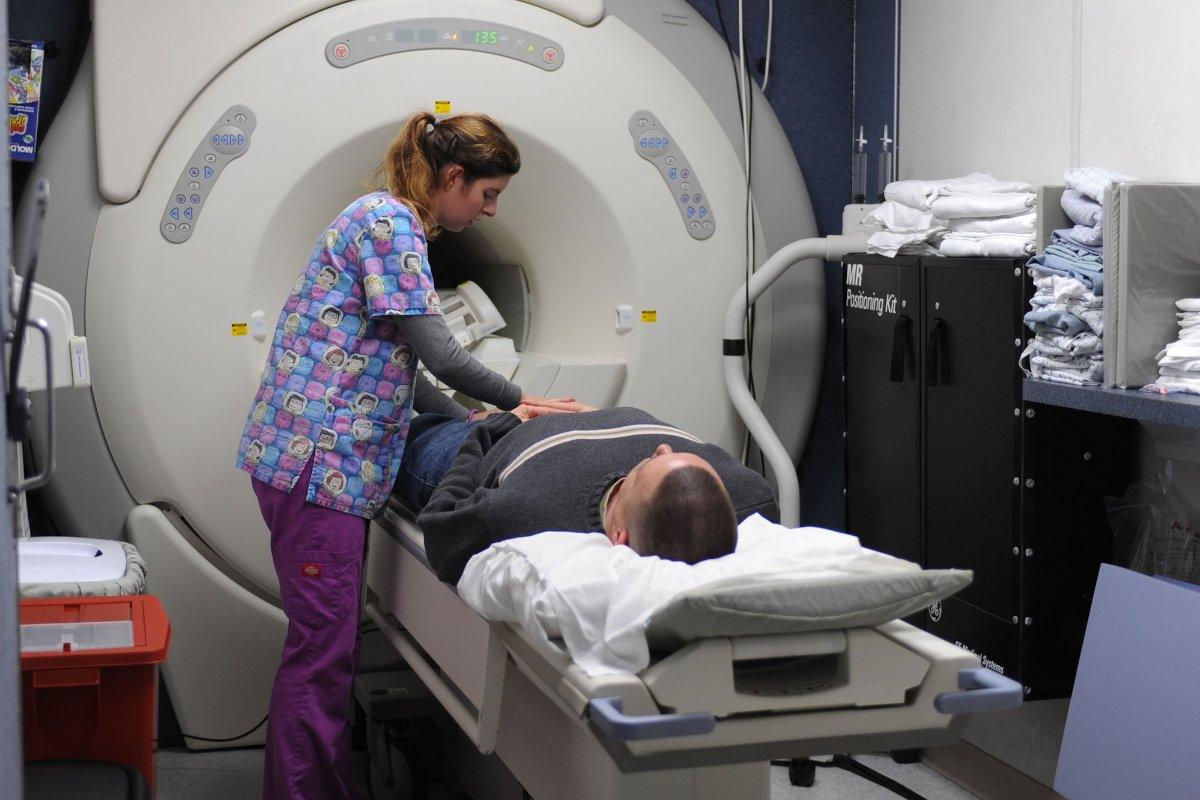
Radiology billing is the process of coding, submitting and collecting payment for diagnostic imaging, image-guided procedures and their interpretation, from x-rays, ultrasound, CT and MRI to mammography, nuclear medicine and interventional radiology. It covers the professional and technical components, contrast and radiopharmaceuticals, and each payer’s authorization and coverage rules.
Radiology claims are coded from the signed report, not the order, so the exam, views, contrast and side on the claim must match what the radiologist dictated. Who bills which part depends on where the study happened: a hospital bills the technical side while the group bills the read, and an imaging center may bill both. Spinal injections under fluoroscopy are covered on our pain management billing page, and dialysis access procedures on our nephrology billing page.
X-rays, ultrasound, CT and MRI with and without contrast, billed globally or split into professional (26) and technical (TC) components.
Screening and diagnostic mammography (77065 to 77067), tomosynthesis (77063, plus G0279 for Medicare diagnostic studies), breast ultrasound and image-guided breast biopsy.
Low-dose CT lung cancer screening (71271), CT colonography (74263) and bone density (77080), each with its own eligibility and frequency rules.
SPECT, PET/CT and other nuclear studies, with radiopharmaceuticals billed by dose.
Image-guided biopsies, drainage and catheter placement, ports, embolization and vascular procedures, with their imaging guidance and global periods.
Remote interpretations, overreads and comparison studies, and the contracts that decide whether reads are billed to payers or to hospitals.
Tell us about your radiology practice, and pick a time that works for you.
Prefer to talk? Call 505-274-7878.
Medicare improper payment rate for diagnostic radiology in fiscal 2024, about $264 million.
Source: Medicare CERT report, fiscal 2024
Medicare’s CERT program put the improper payment rate for diagnostic radiology at 7.2% in its fiscal 2024 report, about $264 million. Most radiology claims are small and high in volume, so one coding or modifier habit repeats across thousands of reads.
A code that doesn’t match the exam in the signed report, or views, contrast or side that don’t line up with the dictation.
A global claim when the hospital owns the equipment, a missing 26 or TC, or the same study billed by two radiologists.
Advanced imaging done without the benefit manager’s approval, approval for a different CPT code, or a diagnosis that doesn’t meet the payer’s policy.
Multiple procedure reductions on same-session studies not checked, or x-ray and CT equipment modifiers left off or applied wrong.
Good radiology billing starts with the signed report and ends with the right component on the right claim.
Every study goes through the same six steps.
We verify coverage through insurance eligibility verification and secure prior authorization for MRI, CT, PET and nuclear studies, then update the approval when the radiologist changes the protocol, such as adding contrast.
Our medical coding team codes each study from the final signed report, including views, contrast, laterality, guidance and add-on codes, with diagnoses taken from the findings or, for normal studies, the reason for the exam.
Each study is billed globally or split into 26 and TC based on where it was done and who owns the equipment, with the right place of service for the patient’s setting.
Exams logged in your RIS and PACS are matched to charges every day, so unsigned reports, missing reads and contrast or supply lines are caught before claims go out.
Claims go out clean, and we post every ERA during payment posting, checking multiple procedure reductions, equipment modifiers, site-neutral rates and contracted rates.
Authorization, medical necessity, frequency and duplicate read denials go through our denial management process, with appeals built on the order, the signed report and the payer’s imaging policy.
The main benefits of outsourcing radiology billing are claims coded from the signed report, components billed by the right party, fewer authorization denials, every read reconciled, and a smooth move to the 2027 rules.
Certified coders match each code to the exam, views, contrast and side the radiologist dictated.
Global, 26 and TC claims follow the site and equipment ownership, so reads aren’t duplicated or left unbilled.
Approvals are matched to the code performed and updated when the protocol changes.
Daily RIS and PACS checks catch unbilled studies, unsigned reports and missing supply lines.
The new conversion factor, site-neutral imaging rates and 2027 code changes go straight into our workflow.
Radiologists and staff spend less time on portals and charge questions, and more time on reads and patients.
Radiology billing answers to CPT and ICD-10-CM rules, the Medicare Physician Fee Schedule and hospital outpatient payment system, national and local coverage policies for imaging and screening, radiology benefit managers, IDTF and supervision rules, and each commercial plan’s imaging policy. Our team works from all of them.
Service
Codes
Billing rule to watch
Professional and technical components
Modifiers 26, TC
Bill 26 for the read when a hospital owns the equipment, and TC when your center does the scan but not the read. A global claim means one entity did both.
CT and MRI with and without contrast
CT 70450, 71250, 74176 to 74178; MRI 70551 to 70553, 72141 to 72158
Code from the report: without, with, or without followed by with. Contrast agents are billed by units in the office and packaged in the hospital.
Same-session studies
Imaging MPPR codes (CT, MRI, ultrasound)
Second and later studies in the same session get 50% off the technical component and 5% off the professional component on Medicare claims.
Equipment modifiers
FX, FY, CT
FX for film x-rays (20% cut), FY for computed radiography (10% cut) and CT for scanners that don’t meet NEMA XR-29 (15% cut).
Mammography and tomosynthesis
77065 to 77067, 77063, G0279, 77061, 77062
Add 77063 to screening 77067. Medicare wants G0279 with 77065 or 77066 for diagnostic tomosynthesis, not 77061 or 77062. A same-day screening turned diagnostic takes modifier GG on the diagnostic study.
Lung cancer screening
71271, G0296
Annual low-dose CT for eligible adults. Medicare requires a shared decision making visit before the first scan, and the order must document eligibility.
CT colonography and bone density
74263, 77080
74263 is the screening CT colonography code. Bone density is usually covered once every 24 months unless a medical reason supports more.
Head and neck MRA
70544 to 70549 and three new combined codes
For 2027, existing codes now include postprocessing and new codes report head and neck MRA together, so update your chargemaster, contracts and authorization requests.
Nuclear medicine and PET
78452, 78815, radiopharmaceutical A codes such as A9500 and A9552
Bill the radiopharmaceutical by its HCPCS code and dose. PET coverage follows Medicare’s national coverage rules for each indication.
IR procedures with guidance
10005 to 10012, 36561, 49406, 76942
Many IR codes include imaging guidance, so bill separate guidance only when the code allows it, and check the global period before billing visits.
Radiology billing needs coders who read the final report, not just the order. Our certified coders code every study from the dictation, assign components by site and equipment, and reconcile your RIS and PACS against charges each day, so no read or scan slips through.
For more than 12 years, Health XRCM has supported 1,500+ providers across 75+ specialties with 50+ certified billing and coding experts. Your practice gets a dedicated team that learns your radiologists, your hospital and imaging center contracts, and your payer mix. Our offshore operations team keeps the cost lower than staffing the same work in-house.
Years in medical billing
Providers served
Specialties
Certified billing and coding experts
Radiology is one of the specialties we bill for. Start with a free billing audit to see which reads, components or authorizations your practice may be losing.
The technical component (TC) covers the equipment, staff and supplies, and the professional component (26) covers the radiologist’s interpretation and report. A global claim bills both when one entity owns the equipment and employs the reader. When a hospital does the scan, it bills the technical side and the radiology group bills the read with modifier 26.
Usually not. Medicare generally pays one interpretation per study, the one that contributes to the patient’s diagnosis or treatment. A second interpretation is paid only in unusual cases, such as when the first reader asks for another opinion on a questionable finding, and the record must show why it was needed.
Original Medicare doesn’t require prior authorization for outpatient MRI or CT, and the appropriate use criteria program was rescinded. Most Medicare Advantage and commercial plans do require it, often through a radiology benefit manager, and the approval is tied to a specific CPT code, so a protocol change can require an updated approval.
From January 1, 2027, imaging without contrast at excepted off-campus hospital outpatient departments is paid at the physician fee schedule equivalent rate instead of the full hospital rate. It covers studies such as x-rays, ultrasound, CT, MRI and bone density. Contrast studies, on-campus departments and rural sole community hospitals aren’t affected, and the radiologist’s read is paid as before.
Yes. When a screening mammogram leads to a diagnostic study on the same day, bill both and add modifier GG to the diagnostic mammogram. Screening mammography has no cost sharing for Medicare patients, but the diagnostic study usually does, so the patient should know before it’s done.
The conversion factor drops 2.31%, though CMS estimates small gains for diagnostic radiology, interventional radiology and nuclear medicine from relative value changes. Non-contrast imaging at off-campus hospital departments moves to site-neutral rates, and new CPT codes arrive for head and neck MRA, prostate biopsy and intraosseous fiducial markers, while the wider CPT set adds 10 AI codes.