

Ophthalmology billing mixes office visits, high-cost drugs and surgery in one practice. A retina clinic can bill thousands of dollars in anti-VEGF drugs in a single day, a cataract surgeon shares 90-day global care with optometrists, and every exam room chooses between eye codes and E/M codes. One missing eye modifier, a wrong drug unit or a modifier 25 visit beside an injection without a separate problem can cost the payment or start an audit. Health XRCM’s ophthalmology billing services keep every exam, test, injection and surgery coded and paid.
We bill for comprehensive ophthalmology practices, retina, glaucoma and cornea specialists, and cataract and refractive surgeons.
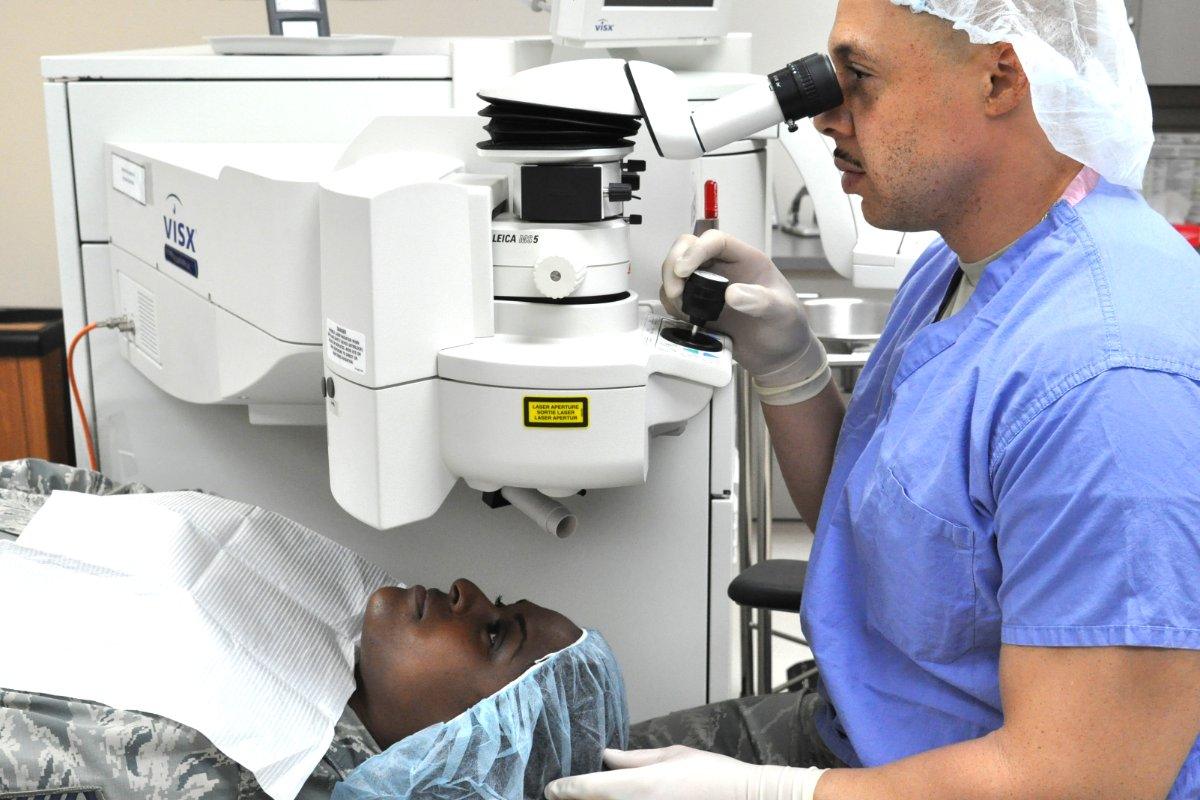
Ophthalmology billing is the process of coding, submitting and collecting payment for the medical and surgical care of the eye, including cataract, glaucoma, macular degeneration, diabetic retinopathy and other retinal and corneal disease. It covers eye exams and office visits, diagnostic imaging, intravitreal injections and drugs, laser procedures, eye surgery and the payer rules behind each one.
Ophthalmology bills differently from most specialties. Visits can be reported with eye codes or E/M codes, nearly every service needs a right or left eye modifier, and diagnosis codes carry the eye and the disease stage in their final characters. Retina practices buy and bill some of Medicare’s most expensive Part B drugs, while cataract and glaucoma surgery carry global periods that are often shared with optometrists.
Eye codes 92002 to 92014 or E/M codes 99202 to 99215, chosen by what the note supports and what the payer recognizes, with refraction (92015) collected from the patient when Medicare doesn’t cover it.
OCT of the optic nerve and retina (92133, 92134), visual fields (92083), fundus photography (92250) and biometry before cataract surgery (92136, 76519).
Injection code 67028 with anti-VEGF drugs such as aflibercept (J0178), faricimab (J2777) and ranibizumab (J2778), their biosimilars, and geographic atrophy drugs (J2781, J2782).
Standard and complex cataract surgery (66984, 66982), combined cataract and glaucoma device codes (66991, 66989), and premium IOLs (V2787, V2788).
Laser trabeculoplasty (65855), canal-based MIGS (66174, 66175), trabeculectomy and tube shunts, and retinal laser treatment (67210, 67228).
Vitrectomy (67036 to 67043), retinal detachment repair (67108), and eyelid, cornea and oculoplastic procedures.
Tell us about your ophthalmology practice, and pick a time that works for you.
Prefer to talk? Call 505-274-7878.
paid by Medicare for 3.3 million intravitreal injections from June 2022 through May 2023, with a same-day visit billed with modifier 25 on 42% of them.
Source: HHS Office of Inspector General
From June 2022 through May 2023, Medicare paid $313 million for 3.3 million intravitreal injections, and providers billed a same-day visit with modifier 25 on 42% of them, according to the HHS Office of Inspector General. In OIG’s sample, documentation for 22 of 24 of those visits didn’t support the modifier, and contractor audits of ophthalmology claims have followed.
An eye exam or E/M visit billed with modifier 25 beside an injection, without a separate problem in the note, is denied on review or recouped later.
Wrong units for the dose given, a missing NDC or JZ modifier, or a drug billed for a diagnosis outside its label or the payer’s step therapy rules turns a vial into a write-off.
A missing RT, LT or 50 modifier, OCT billed with fundus photography on the same day, or 92133 and 92134 billed together gets denied.
Visits billed inside a cataract or glaucoma global period, co-management split without modifiers 54 and 55, or premium IOL charges sent to Medicare instead of the patient.
Good ophthalmology billing ties every service to the right eye, the right drug dose and the right part of the global period.
Every patient encounter goes through the same six steps.
We verify medical and vision coverage through insurance eligibility verification, and secure prior authorization for retina drugs, including Medicare Advantage step therapy, and for cataract, glaucoma and oculoplastic surgery.
Our medical coding team chooses eye or E/M codes from the note, adds modifier 25 only when a separate problem is documented, and codes each diagnosis with the eye and stage it requires.
Tests are billed once for one or both eyes and checked against NCCI edits. Each injection is billed with its eye modifier, and each drug with units calculated from the dose, the NDC and modifier JZ or JW.
Cataract, glaucoma and retina surgery is coded from the operative report, with modifiers 54 and 55 for shared postoperative care, global periods tracked and premium IOL charges billed to the patient.
Claims go out clean, and we post every ERA during payment posting, checking drug payments against expected allowables and flagging any that fall below what you paid for the drug.
Modifier 25, drug and medical necessity denials go through our denial management process, with appeals that cite the exam findings, imaging, the drug’s label and the payer’s coverage policy.
The main benefits of outsourcing ophthalmology billing are protected drug revenue, same-day visits that hold up to audit, fewer testing denials and clean surgical and co-management claims.
Every vial is matched to its dose, units, NDC and payer policy, and underpaid drug claims are caught at posting.
Modifier 25 goes on a visit only when the note shows a separate problem, so paid visits stay paid after review.
OCT, photos, fields and biometry are billed by NCCI edits and frequency rules.
Cataract and glaucoma surgery, co-management splits and premium IOL charges are billed the way Medicare expects.
The conversion factor cut, modifier B1, the same-day E/M reduction and new telehealth modifiers go straight into our workflow.
Technicians and front desk staff spend less time on payer portals and drug authorizations, and more time with patients.
Ophthalmology billing answers to CPT and ICD-10-CM rules, NCCI edits, Medicare contractor policies for testing and drugs, Part B drug payment rules, global surgery rules and each commercial and vision plan’s policies. Our team works from all of them.
Service
Codes
Billing rule to watch
Eye exam or E/M
92002, 92004, 92012, 92014, 99202 to 99215, 92015
Choose one code set per visit by what the note supports. Medicare doesn’t pay refraction (92015), so it’s collected from the patient.
Diagnosis laterality and stage
H35.32-, E11.3-, H40.1-
Wet AMD, diabetic retinopathy and glaucoma codes carry the eye and the stage or activity in their final characters. Unspecified eye codes get denied.
Intravitreal injection
67028, RT, LT, 50
0-day global. Bilateral injections take modifier 50 for Medicare. A same-day visit needs modifier 25 and a separate problem.
Anti-VEGF drugs
J0178, J0177, J2777, J2778, J0179, biosimilar Q-codes
Units come from the dose, such as 6 mg of faricimab billed as 60 units of J2777. Report the NDC, JZ or JW, and a diagnosis on the drug’s label.
Geographic atrophy drugs
J2781, J2782
A 15 mg pegcetacoplan dose is 15 units of J2781. Payers often require prior authorization and a documented GA diagnosis.
OCT and fundus photos
92133, 92134, 92250
92133 and 92134 can’t be billed together. OCT and fundus photography are generally mutually exclusive, and each is billed once for one or both eyes.
Biometry
92136, 76519
Bill the technical component once for both eyes and the professional component for each eye with RT or LT.
Cataract surgery
66984, 66982, 66991, 66989
90-day global. The complex codes need documented complexity, and 66991 or 66989 apply when a drainage device is inserted.
Co-management and premium IOLs
Modifiers 54, 55, G0559, V2787, V2788
Use 54 when the surgeon won’t provide postoperative care and 55 with the transfer date for the co-managing doctor. Premium lens functions are billed to the patient.
Glaucoma laser and surgery
65855, 66174, 66175, 66170, 66179
Laser trabeculoplasty has a 10-day global and incisional surgery a 90-day global. Check eye modifiers and payer limits on repeat laser.
Ophthalmology billing needs coders who know eye codes, drug units and global periods as well as your technicians know the equipment. Our team reads the exam and imaging notes, matches every injection to its drug and dose, and keeps co-management and premium lens billing clean.
For more than 12 years, Health XRCM has supported 1,500+ providers across 75+ specialties with 50+ certified billing and coding experts. Your practice gets a dedicated team that learns your physicians, your surgery centers and co-managing optometrists, and your payer mix. Our offshore operations team keeps the cost lower than staffing the same work in-house.
Years in medical billing
Providers served
Specialties
Certified billing and coding experts
Ophthalmology is one of the specialties we bill for. Start with a free billing audit to see which visits, drugs or surgeries your practice may be underbilling.
Either set can be used for a medical eye visit, so pick the one the documentation best supports and the payer recognizes. Eye codes 92002 to 92014 describe the eye exam itself, while E/M codes 99202 to 99215 are leveled by medical decision making or time. Use one set per visit, never both.
Bill 67028 with RT or LT, or modifier 50 for both eyes on a Medicare claim, plus the drug’s HCPCS code. Calculate units from the dose and the code’s unit size, report the NDC and modifier JZ or JW, and make sure the diagnosis is on the drug’s label and the payer’s policy.
Yes, but only with modifier 25 and a separate problem in the note, such as a new complaint or a condition in the other eye. Reviewing a patient who is due for an injection is part of 67028. From 2027, Medicare also pays a same-day office E/M (99202 to 99215) at 80% when it’s the lower-paid service.
The surgeon bills the cataract code with modifier 54 when another doctor will provide postoperative care, and the co-managing doctor bills the same code with modifier 55 and the date care was transferred. Without a formal transfer of care, postoperative visits are billed as E/M visits with add-on code G0559.
Medicare pays for cataract surgery and the conventional lens. The patient pays the extra cost of the presbyopia- or astigmatism-correcting function, reported with V2788 or V2787. Tell the patient their share before surgery, and keep premium lens charges off the Medicare-allowed amount for the surgery.
The conversion factor drops 2.31%, G2211 becomes modifier B1, and an office E/M billed with a same-day 0-day procedure like an injection is paid at 80% when it’s the lower-paid service. Medicare adds informational telehealth modifiers BB and BC, and a new cyclodialysis code takes effect.