

Podiatry billing turns on details most coders never learn: which nails were debrided and why, which class findings make routine foot care covered, which toe each modifier points to, and whether the visit and the procedure should both be paid. Medicare already flags podiatry for audits, and in 2027 it cuts office visits billed with same-day nail and callus care by 20%. Skin substitutes for diabetic foot ulcers now pay a flat rate, with prior authorization in four states. Health XRCM’s podiatry billing services code every visit, procedure and supply to the payer’s rules, so your practice is paid for the foot care it delivers.
We bill for solo and group podiatry practices, foot and ankle surgeons, wound care podiatrists, and podiatrists who see patients in nursing facilities.
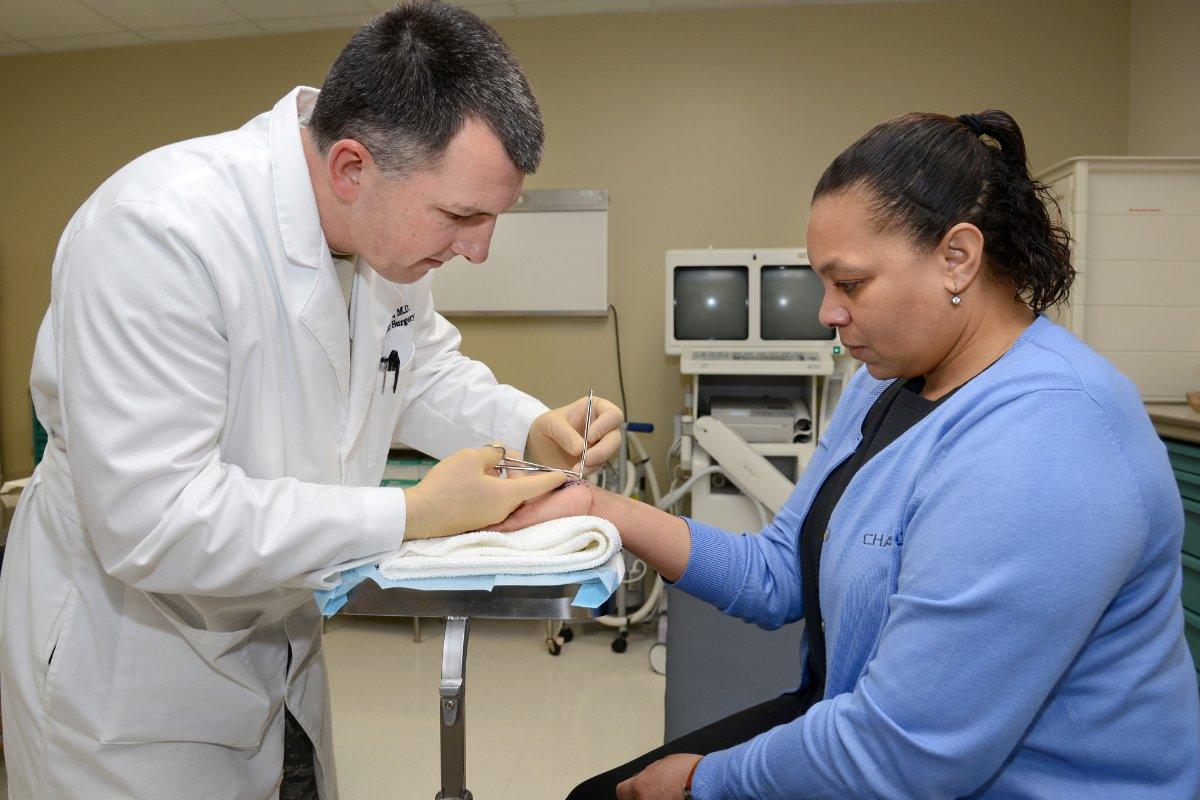
Podiatry billing is the process of coding, submitting and collecting payment for the diagnosis and treatment of foot and ankle conditions, from nail and skin care and diabetic foot exams to wound care, injections, surgery and footwear. It covers office and facility visits, procedures, durable medical equipment and the Medicare routine foot care rules that decide what is covered.
Much of podiatry serves patients with diabetes, peripheral vascular disease or neuropathy, and Medicare covers their foot care only when the note shows the systemic condition and the right class findings. Wound care adds depth and size rules, and surgery adds 90-day global periods. Ankle fractures, joint replacement and sports medicine are covered on our orthopedic billing page, and diabetes management on our endocrinology billing page.
Office E/M visits (99202 to 99215), nursing facility visits (99304 to 99310), and diabetic foot exams with modifier 25 when they’re a separate service.
Nail debridement (11720, 11721), nail trimming (G0127), corn and callus paring (11055 to 11057), and ingrown nail removal (11730, 11750).
Debridement (11042 to 11047, 97597, 97598), skin substitute application (15271 to 15278) and offloading for diabetic foot ulcers.
Plantar fascia and joint injections (20550, 20600, 20604) with their drug codes, and foot and ankle x-rays (73620, 73630).
Bunion and hammertoe correction (28285, 28292 to 28299), neuroma excision and other procedures with 90-day global care.
Diabetic shoes and inserts (A5500, A5501, A5512 to A5514), custom orthotics (L3000) and walking boots, billed under DMEPOS rules.
Tell us about your podiatry practice, and pick a time that works for you.
Prefer to talk? Call 505-274-7878.
CMS improper payment rate for podiatry in the 2024 reporting period, about $216.9 million, with insufficient documentation behind most errors.
Source: CMS
CMS put podiatry’s improper payment rate at 11.2% for the 2024 reporting period, about $216.9 million, with insufficient documentation behind most of those errors. In 2027 the same-day visit cut also lands hardest on specialties like podiatry that pair visits with quick procedures.
A missing Q7, Q8 or Q9, class findings that aren’t in the note, a visit sooner than the allowed interval, or a systemic condition that isn’t linked to the service.
No T modifier for each toe, a missing RT or LT, no XS on a separate procedure, or modifier 25 on a visit with no separate problem.
Wound size and depth not recorded at each visit, debridement coded deeper than the note supports, or a skin substitute applied without the approval or coverage the payer requires.
Diabetic shoes billed without the certifying statement, orthotics billed to Medicare without the GY modifier, or post-op visits billed inside a global period.
Good podiatry billing ties every code to a nail, toe, wound or finding the note actually names.
Every visit and procedure goes through the same six steps.
We verify coverage through insurance eligibility verification, including foot care visits already used, DME benefits and the patient’s plan type, and secure prior authorization for surgery, custom orthotics and skin substitutes where it’s required.
Before coding, we check the note for the systemic condition, class findings, nail and lesion counts, wound measurements, and the managing physician’s details when the payer needs them.
Our medical coding team codes each procedure by nail, toe, depth and size, and adds T, RT, LT, Q, 25 and XS modifiers only where the note supports them.
Diabetic shoes, inserts, orthotics and boots go out with the certifying statement, prescription and fitting notes, and skin substitutes are billed by the square centimeters applied.
Claims go out clean, and we post every ERA during payment posting, checking same-day reductions, multiple procedure reductions and global periods against the fee schedule.
Routine foot care, medical necessity, frequency and audit requests go through our denial management process, with appeals built on the class findings, wound records and the payer’s foot care policy.
The main benefits of outsourcing podiatry billing are fewer routine foot care denials, procedures coded to the toe, wound and DME claims that hold up under review, and a smooth move to the 2027 rules.
Class findings, Q modifiers and visit intervals are checked before each claim goes out.
T, RT and LT modifiers show exactly which nails and toes were treated, so distinct work isn’t denied as a duplicate.
Debridement depth, wound size and skin substitute units match the record at every visit.
Diabetic shoe and orthotic claims carry the statements and notes each payer asks for.
The same-day visit cut, skin substitute pricing and prior authorization rules go straight into our workflow.
Your staff spends less time on payer portals and audit requests, and more time with patients.
Podiatry billing answers to CPT and ICD-10-CM rules, Medicare’s routine foot care exclusion and each MAC’s foot care LCD, the Medicare Physician Fee Schedule, the DMEPOS program for footwear and orthotics, the WISeR model and each commercial plan’s foot care policy. Our team works from all of them.
Service
Codes
Billing rule to watch
Nail debridement
11720, 11721
Needs documented mycosis with pain or limited walking. 0-day global, so the 2027 same-day cut applies, and Q modifiers apply when it’s billed as at-risk foot care.
Nail trimming and callus paring
G0127, 11055 to 11057
Routine foot care unless class findings support coverage. Don’t bill G0127 and 11720 for the same nail, and use GY or GA when the service isn’t covered.
Ingrown nails
11730, 11732, 11750
Use a T modifier for each toe. 11750 includes removing the nail, so 11730 isn’t billed for the same nail, and 11750 carries a 10-day global.
Wound debridement
11042 to 11047, 97597, 97598
Coded by the deepest tissue removed and the area debrided. Record wound size, depth and tissue type at every visit.
Skin substitutes
15271 to 15278, product Q-codes
Bill product by square centimeters applied at the flat rate. Check the MAC’s policy and WISeR approval in the four states before applying.
Injections
20550, 20600, 20604, J-codes
20550 for plantar fascia and 20604 for a small joint with ultrasound guidance. The drug is billed separately by its J-code and units.
Foot surgery
28285, 28292 to 28299
90-day globals, so post-op visits are bundled. Use modifiers 54 and 55 when another clinician takes over post-op care.
Diabetic shoes and inserts
A5500, A5501, A5512 to A5514
One pair of shoes and up to three pairs of inserts a year, billed by a DMEPOS supplier with the certifying statement on file.
Orthotics and boots
L3000, L4361, L4387
Medicare excludes most foot orthotics, so bill them with GY and tell the patient first. Walking boots follow DMEPOS rules, and commercial coverage varies.
Podiatry modifiers
Q7, Q8, Q9, TA, T1 to T9, RT, LT, GA, GY, 25, XS
Q modifiers prove class findings, T modifiers name the toe, and GA or GY flag ABN or non-covered care. Modifier 25 only for a separate problem.
Podiatry billing needs coders who read a foot exam the way a podiatrist does. Our team checks class findings, counts nails and toes, measures wounds against the codes billed, and follows each MAC’s routine foot care rules, so your claims hold up when an auditor asks for records.
For more than 12 years, Health XRCM has supported 1,500+ providers across 75+ specialties with 50+ certified billing and coding experts. Your practice gets a dedicated team that learns your podiatrists, your facilities and your payer mix. Our offshore operations team keeps the cost lower than staffing the same work in-house.
Years in medical billing
Providers served
Specialties
Certified billing and coding experts
Podiatry is one of the specialties we bill for. Start with a free billing audit to see which foot care, wound or DME claims your practice may be losing.
Medicare normally excludes routine foot care, but covers it when a systemic condition such as diabetes, peripheral vascular disease or neuropathy puts the feet at risk. The note must show qualifying class findings, reported with Q7, Q8 or Q9, and visits are usually limited to every 61 days. Some conditions also require the managing MD or DO’s details on the claim.
Q7 means one Class A finding, such as a nontraumatic amputation. Q8 means two Class B findings, such as absent pedal pulses or advanced trophic changes. Q9 means one Class B finding plus two Class C findings, such as claudication, cold feet, edema, paresthesia or burning. The note must name each finding the modifier claims.
Only when the visit addresses a separate, significant problem, such as a new wound or an infection, with modifier 25 on the E/M. A foot check that’s part of the debridement visit isn’t separate. From 2027, Medicare pays the lower-paid service at 80% when an office visit is billed with a 0-day procedure like 11720 or callus paring.
Since 2026, Medicare pays most skin substitutes used in the office as supplies at a flat $127.14 per square centimeter. For 2027, sheet products stay at that rate and non-sheet products get national pricing in the office. In New Jersey, Ohio, Oklahoma and Texas, WISeR also requires prior authorization before application.
A podiatrist can prescribe and fit diabetic shoes and inserts, but the MD or DO managing the patient’s diabetes must sign a certifying statement confirming the diabetes and a qualifying foot condition. Medicare covers one pair of shoes and up to three pairs of inserts a year, billed by a DMEPOS-enrolled supplier to the DME MAC.
T modifiers identify the toe: TA is the left great toe, T1 to T4 the other left toes, T5 the right great toe and T6 to T9 the other right toes. Add them to nail, ingrown nail and toe procedures so the payer sees each toe as distinct work, since missing toe modifiers often trigger duplicate denials.