

Pain management billing depends on proving the last injection worked. Medicare caps epidural and facet sessions per spinal region, pays for radiofrequency ablation only after two positive diagnostic blocks, and in six states now requires prior authorization for epidural steroid injections. In 2027, ASC rates for the busiest pain codes fall again and office visits billed with same-day injections are cut 20%. Health XRCM’s pain management billing services code every block, ablation, stimulator trial and drug test to each payer’s rules, so your procedures get paid the first time.
We bill for interventional pain practices, anesthesiology pain groups, PM&R and spine clinics, and pain centers with their own surgery centers.
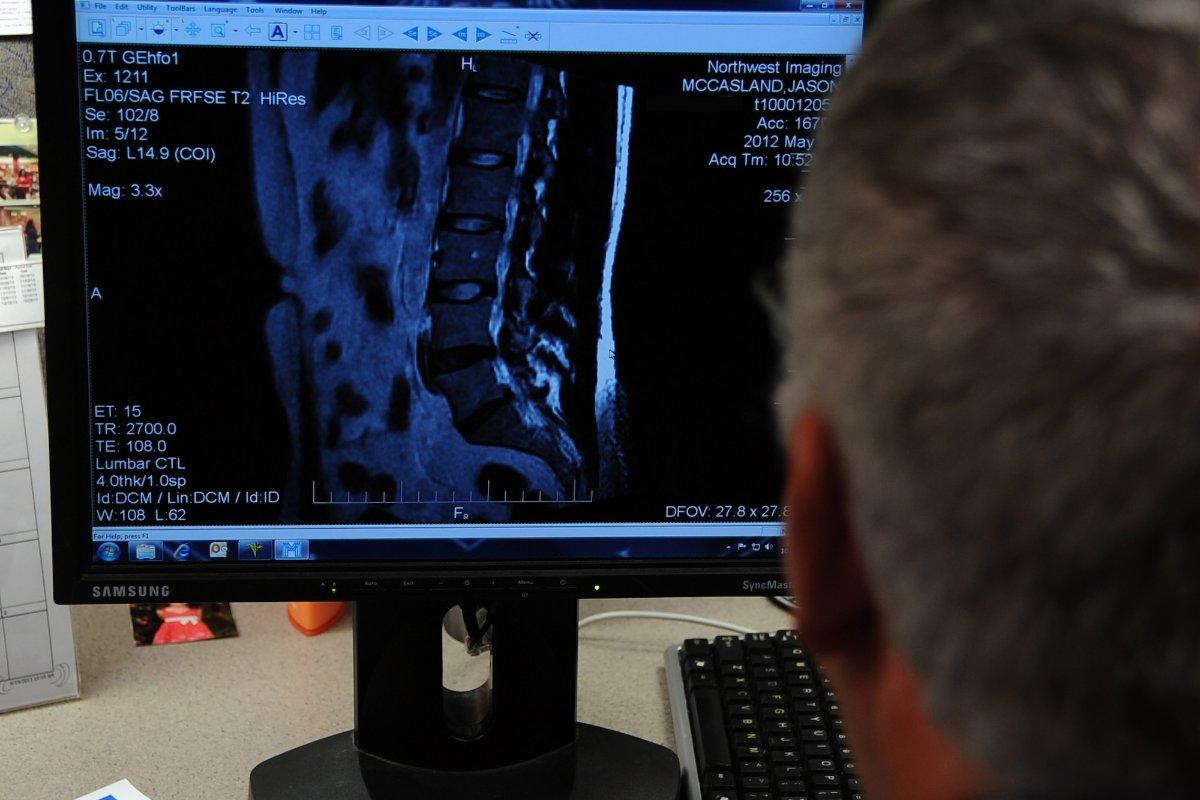
Pain management billing is the process of coding, submitting and collecting payment for the diagnosis and treatment of acute and chronic pain, from spinal injections and nerve ablation to stimulator trials, drug pumps and medication management. It covers office visits, image-guided procedures, drug testing and the coverage rules each payer sets for them.
Most pain revenue comes from repeat procedures, which is where payers look hardest. Each session counts toward a regional frequency limit, each repeat needs documented relief, and the place of service decides whether prior authorization applies. Spine surgery and permanent stimulator implants are covered on our neurosurgery billing page, and joint injections on our orthopedic billing page.
New and established E/M visits, opioid and non-opioid medication management, and Medicare’s monthly chronic pain management codes G3002 and G3003.
Interlaminar (62320 to 62327) and transforaminal (64479 to 64484) injections, with imaging guidance built into most of the codes.
Medial branch blocks and facet injections (64490 to 64495), facet radiofrequency ablation (64633 to 64636), and sacroiliac joint injections, blocks and ablation (27096, G0260, 64451, 64625).
Genicular nerve blocks and ablation (64454, 64624), other peripheral nerve blocks, trigger point injections (20552, 20553) and basivertebral nerve ablation (64628, 64629).
Spinal cord stimulator trials (63650), device programming, and intrathecal pump analysis and refills (62367 to 62370, 95990, 95991) with the drug billed by units.
Presumptive (80305 to 80307) and definitive (G0480 to G0483) urine drug testing for patients on controlled substances.
Tell us about your pain management practice, and pick a time that works for you.
Prefer to talk? Call 505-274-7878.
of US adults had chronic pain in 2023, and 8.5% had pain that frequently limited their life or work.
Source: CDC
In 2023, 24.3% of US adults had chronic pain and 8.5% had pain that frequently limited their life or work, according to the CDC. Payers have answered with tighter controls, and Medicare’s final 2027 ASC rule cuts the four pain codes among its 10 highest-volume procedures by about 3.7% on average.
A fifth epidural session in the same region within a rolling 12 months, a repeat ablation before six months, or a repeat injection with no documented relief from the last one.
A facet procedure in a hospital outpatient department without an approval number, or an epidural injection in a WISeR state that drops into prepayment review.
Fluoroscopy billed on top of codes that include it, bilateral facet work without modifier 50, too many levels in one session, or a same-day visit with no separate problem.
Pump drugs billed with the wrong units, unreported waste, or definitive drug panels ordered by routine instead of by risk.
Good pain management billing checks the patient’s history, the spinal region and the payer’s policy before the needle goes in.
Every visit and procedure goes through the same six steps.
We verify coverage through insurance eligibility verification, count prior sessions by region against each payer’s limit, and secure prior authorization for hospital outpatient facet procedures, WISeR services and the commercial plans that route pain procedures through a benefit manager.
Our medical coding team levels each visit by medical decision making or time, adds modifier 25 only when the visit covers a separate problem or a new decision, and codes the pain diagnosis to the region, side and cause the record supports.
Procedure notes are coded by level, side and imaging method, with add-on codes, modifier 50 and NCCI edits checked, and missing pain scores flagged, since the next approval depends on them.
Stimulator trials, programming and pump refills are billed with the right device and drug codes, units and waste modifiers, and drug tests are billed by method and drug class under your CLIA certificate.
Claims go out clean, and we post every ERA during payment posting, checking multiple procedure reductions, bilateral payment and the 2027 same-day visit cut against the fee schedule.
Frequency, medical necessity and authorization denials go through our denial management process, with appeals built on the pain score history, imaging, conservative care record and the payer’s LCD or policy.
The main benefits of outsourcing pain management billing are fewer frequency and authorization denials, procedures coded to the level, drugs and devices billed in full and a smooth move to the 2027 rules.
Every prior session is counted by region and rolling 12 months before the next one goes on the schedule.
Hospital outpatient, WISeR and commercial authorizations are tracked by code, level and date of service.
Add-on levels, bilateral work and included imaging are coded by CPT and NCCI rules, not by habit.
Pump drugs, waste, stimulator trials and drug tests reach the claim with the right codes and units.
The same-day visit cut, modifier B1, lower ASC rates and the Ambulatory Specialty Model go straight into our workflow.
Front desk and clinical staff spend less time on payer portals and session counts, and more time with patients.
Pain management billing answers to CPT and NCCI rules, Medicare’s LCDs for epidural, facet and drug testing services, the hospital outpatient prior authorization program, CMS Innovation Center models and each commercial plan’s authorization criteria. Our team works from all of them.
Service
Codes
Billing rule to watch
Interlaminar epidural
62320 to 62327
62321 and 62323 include imaging, so 77003 isn’t billed. Each date counts as one session toward the limit, and WISeR states need prior approval.
Transforaminal epidural
64479 to 64484
Billed per level, with +64480 or +64484 for added levels and modifier 50 for bilateral. Medicare’s LCDs allow no more than two transforaminal levels per session.
Facet injections and medial branch blocks
64490 to 64495
Imaging is included and bilateral work takes modifier 50. Record pain scores before and after each diagnostic block, since ablation needs two blocks with 80% relief.
Facet ablation
64633 to 64636
10-day global, so a same-day decision visit takes modifier 25 and an unrelated visit in the next 10 days takes 24. Hospital outpatient claims need prior authorization.
Genicular and SI joint ablation
64624, 64625
10-day global with imaging included. Coverage differs by Medicare contractor and commercial plan, so check the policy before scheduling.
SI joint injection and nerve block
27096, G0260, 64451
27096 requires imaging and goes on the physician claim, while many ASC and hospital claims use G0260. 64451 isn’t reported with lumbar facet codes 64493 to 64495.
Trigger point injections
20552, 20553
Billed once per session by muscle count, not per injection: 20552 for one or two muscles, 20553 for three or more. 0-day global.
Stimulator trial
63650, 95970 to 95972
One unit per lead, with a 10-day global. Hospital outpatient and WISeR prior authorization apply, and Medicare expects a psychological evaluation before implantation.
Intrathecal pump
62367 to 62370, 95990, 95991
The code depends on whether the pump was analyzed, reprogrammed or refilled, and by whom. The drug is billed separately by J-code units, with JW or JZ for waste.
Urine drug testing
80305 to 80307, G0480 to G0483
Presumptive codes go by method and definitive codes by drug class count. Test by documented risk, under a CLIA certificate for the method.
Pain management billing needs coders who read the procedure note and the pain score history together. Our team counts every session by region, checks the relief the last block produced, and catches the levels, sides and drug units that general billing teams often miss.
For more than 12 years, Health XRCM has supported 1,500+ providers across 75+ specialties with 50+ certified billing and coding experts. Your practice gets a dedicated team that learns your physicians, your surgery centers and hospitals, and your payer mix. Our offshore operations team keeps the cost lower than staffing the same work in-house.
Years in medical billing
Providers served
Specialties
Certified billing and coding experts
Pain management is one of the specialties we bill for. Start with a free billing audit to see which injections, ablations or drug tests your practice may be losing to frequency and authorization denials.
Bill 62321 or 62323 for an interlaminar injection with imaging, or 64479 to 64484 for transforaminal injections by level, with modifier 50 for bilateral work. Imaging is included, so fluoroscopy isn’t billed separately. Code the diagnosis to the spinal region and record pain and function scores before and after the injection.
Medicare’s epidural LCDs generally allow four sessions per spinal region in a rolling 12 months, counted by date of service rather than by level, and some contractors apply the cap across all regions. Each repeat needs documented relief from the last injection, and treatment that runs past 12 months may draw medical review.
Only in hospital outpatient departments. Since July 1, 2023, facet injections, medial branch blocks and facet ablation (64490 to 64495, 64633 to 64636) done in a hospital outpatient department need a Medicare prior authorization number. Offices and ASCs don’t, though Medicare Advantage and commercial plans usually require their own approval.
Yes, when the visit covers a separate problem or a new treatment decision, with modifier 25 on the E/M. A visit only to give a planned injection isn’t billable. From 2027, Medicare pays the lower-paid service at 80% when an office E/M is billed with a 0-day procedure such as an epidural, nerve block or trigger point injection.
WISeR is a CMS model that adds prior authorization to Original Medicare in Arizona, New Jersey, Ohio, Oklahoma, Texas and Washington from 2026 through 2031. It covers epidural steroid injections, nerve stimulator implants, vertebral augmentation and other listed services. Claims sent without approval go to prepayment review, which holds payment until records are reviewed.
The conversion factor drops 2.31%, office visits billed with same-day 0-day injections are cut 20%, and G2211 becomes modifier B1. ASC rates for epidural, facet and ablation codes fall for a second year, and the Ambulatory Specialty Model starts tying pain physicians’ Part B pay to the cost and quality of low back pain care.