

Physical therapy billing runs on minutes, modifiers and plans of care. Every timed code follows the 8-minute rule on Medicare claims and a different unit rule on many commercial plans, every line needs the GP modifier, and the KX threshold, assistant modifiers and progress report dates decide whether a visit is paid or audited. In 2027 the KX threshold rises, the conversion factor falls and remote therapeutic monitoring gets new rules. Health XRCM’s physical therapy billing services code every unit, track every plan of care and catch the modifier errors behind most denials, so your clinic is paid for the care it gives.
We bill for private practice physical therapists, multi-location outpatient rehab groups, and clinics that also offer occupational and speech therapy.
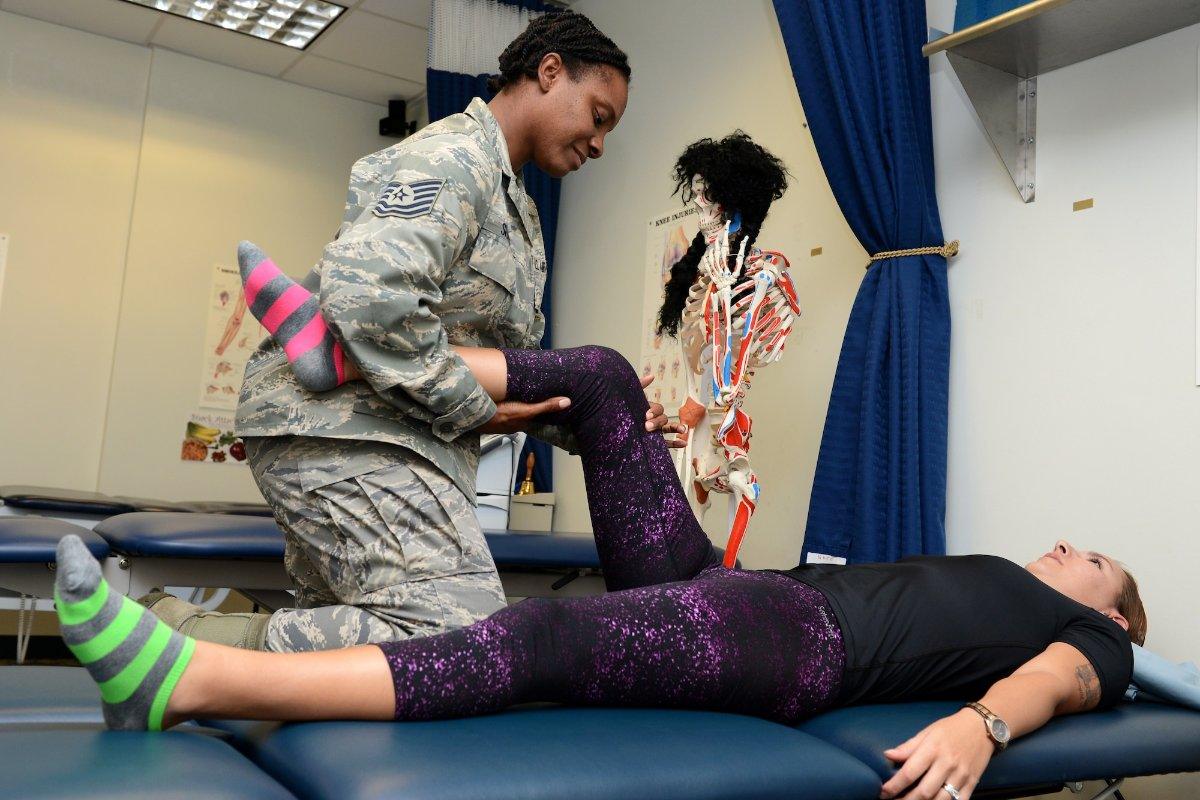
Physical therapy billing is the process of coding, submitting and collecting payment for the evaluations, treatment and monitoring that physical therapists and their assistants provide to restore movement and function. It covers timed and untimed CPT codes, therapy modifiers, plan of care rules, and the Medicare, commercial, workers’ compensation and auto rules behind each claim.
PT claims are built from several 15-minute units per visit, so a small counting mistake repeats across every patient. Medicare adds its own layer, from the certified plan of care and progress reports to the KX threshold and the CQ modifier for assistants. Orthopedic surgery and joint injections are covered on our orthopedic billing page, and therapy under a home health plan on our home health billing page.
PT evaluations by complexity (97161 to 97163), re-evaluations (97164), and OT evaluations (97165 to 97168) for clinics that offer occupational therapy.
Therapeutic exercise (97110), neuromuscular re-education (97112), manual therapy (97140), therapeutic activities (97530), gait training (97116) and self-care training (97535).
Supervised modalities such as traction and electrical stimulation (97012, 97014, G0283), and group therapy (97150).
Remote therapeutic monitoring (98975 to 98981, 98984 to 98986) and caregiver training (97550 to 97552) under the plan of care.
Initial certification, progress reports, recertification, KX attestations, ABNs, and CQ or CO for care furnished by assistants.
Medicare Part B, Medicare Advantage, commercial plans with visit limits and authorization vendors, workers’ compensation and auto claims.
Tell us about your physical therapy practice, and pick a time that works for you.
Prefer to talk? Call 505-274-7878.
Medicare Part B improper payment rate for physical therapists in private practice in 2024, about $659.2 million.
Source: CMS 2024 improper payment data
CMS’s 2024 improper payment data put the error rate for physical therapists in private practice billing Medicare Part B at 15.8%, or about $659.2 million, roughly twice Medicare’s overall rate of 7.66%. Missing orders, plans of care and treatment notes are among the most common reasons therapy claims fail review.
Units billed per code instead of by total timed minutes on a Medicare claim, or Medicare’s method used on a commercial plan that counts each code on its own.
No certification and no proof the plan went to the referring provider within 30 days, a missed progress report or a lapsed recertification.
A missing GP or KX, no CQ when an assistant furnished more than 10% of a service, or a bundled code pair billed without XU.
Visits past a commercial plan’s approved count, an expired authorization, or a workers’ comp visit without adjuster approval.
Good physical therapy billing ties every unit on the claim to minutes in the note and a current plan of care.
Every patient episode goes through the same six steps.
We verify coverage through insurance eligibility verification, including visit limits, copays, deductibles and the Medicare therapy dollars a patient has already used this year, and secure prior authorization for plans that require it.
We track every patient’s certification, 10-visit progress report, recertification and authorization end date, and flag each one before it lapses.
Our medical coding team codes evaluations by complexity, calculates units from timed minutes under each payer’s rule, and adds GP, KX, CQ or XU where the record supports them.
Claims are checked against NCCI edits, multiple procedure payment reductions and payer policies before they go out, and workers’ comp and auto claims go with their claim numbers and notes.
We post every ERA during payment posting, checking therapy reductions, CQ payments and contracted rates, and moving patient balances quickly.
Medical necessity, frequency, authorization and documentation denials go through our denial management process, with appeals built on the plan of care, progress notes, functional outcome scores and the payer’s policy.
The main benefits of outsourcing physical therapy billing are every unit billed correctly, plans of care that don’t lapse, fewer modifier and authorization denials and a smooth move to the 2027 rules.
Medicare’s 8-minute rule and commercial per-code rules are applied claim by claim, so you don’t overbill or leave units behind.
Certifications, progress reports and recertifications are tracked by date for every patient.
GP, KX, CQ and XU are added where the record supports them and left off where it doesn’t.
Visits are matched to approved counts and dates before they’re scheduled.
The new KX threshold, conversion factor, RTM rules and MIPS measure changes go straight into our workflow.
Therapists and front desk staff spend less time on payer portals and paperwork, and more time with patients.
Physical therapy billing answers to CPT and NCCI rules, Medicare’s outpatient therapy rules in Chapter 15 of the Benefit Policy Manual, the Medicare Physician Fee Schedule, state practice acts, workers’ compensation and auto fee schedules, and each commercial plan’s visit and authorization policy. Our team works from all of them.
Service
Codes
Billing rule to watch
Evaluations
97161 to 97163, 97164
Pick the complexity the history, exam and decision making support. Re-evaluations need new findings or a significant change, not a routine progress check.
Exercise and neuromuscular re-education
97110, 97112
Timed 15-minute codes. On Medicare claims, units come from total timed minutes for the visit. 97112 needs documented balance, coordination or posture work.
Manual therapy and therapeutic activities
97140, 97530
An NCCI pair, so bill both only for separate intervals with modifier 59 or XU. Each needs its own minutes in the note.
Gait and self-care training
97116, 97535
Timed codes tied to functional goals in the plan of care, such as walking distance or home tasks.
Supervised modalities
97010, 97012, 97014, G0283, 97016, 97018
Untimed, one unit per day. 97010 is bundled, and Medicare uses G0283 instead of 97014 for unattended electrical stimulation.
Group therapy
97150
Untimed and billed per patient for two or more patients. Group minutes can’t also count toward individual timed codes.
Caregiver training
97550 to 97552
Billed under the patient’s plan of care when the caregiver is trained without the patient present. 97550 and 97551 are timed, and the note names the caregiver.
Remote therapeutic monitoring
98975 to 98981, 98984 to 98986
GP modifier and a current plan of care required. From 2027, an initiating visit must come first, and CQ applies when a PTA does the work.
Dry needling
20560, 20561
Medicare doesn’t pay PTs for dry needling and many commercial plans don’t either. Check the policy and use an ABN or financial waiver where allowed.
Therapy modifiers
GP, KX, CQ, 59, XU, GA
GP goes on every PT line. KX after the threshold, CQ for assistant care above 10%, XU for distinct intervals and GA when an ABN is on file.
Physical therapy billing needs coders who read the daily note, not just the flow sheet. Our team matches every unit to documented minutes, tracks each patient’s plan of care and authorization, and knows Medicare’s therapy rules as well as the commercial, workers’ comp and auto rules that differ from them.
For more than 12 years, Health XRCM has supported 1,500+ providers across 75+ specialties with 50+ certified billing and coding experts. Your practice gets a dedicated team that learns your therapists, your clinic locations and your payer mix. Our offshore operations team keeps the cost lower than staffing the same work in-house.
Years in medical billing
Providers served
Specialties
Certified billing and coding experts
Physical therapy is one of the specialties we bill for. Start with a free billing audit to see which units, modifiers or plan of care gaps are costing your clinic.
Medicare’s 8-minute rule bills timed codes from the total timed minutes of the visit: 8 to 22 minutes is one unit, 23 to 37 is two, 38 to 52 is three, and so on. Many commercial plans instead apply CPT’s rule to each code separately, so check each payer’s policy before you calculate units.
Add KX to each therapy line once a Medicare patient’s allowed therapy charges for the year pass the threshold, which is $2,540 in 2027 for PT and speech therapy combined and $2,540 for OT. KX attests that the care is medically necessary, so the record must support it, and claims past $3,000 may face targeted review.
Not always. Since January 1, 2025, a signed and dated order or referral in the record meets initial certification when you can show the plan of care was sent to that provider within 30 days of the evaluation. Without a referral, a physician or NPP must still sign the plan within 30 days, and recertifications still need a signature.
Add CQ to any service a physical therapist assistant furnishes in whole or in part when the PTA’s independent time is more than 10% of the service. Medicare pays those lines at 85% of the fee schedule. PTAs in private practice can work under general supervision since 2025, though your state’s rules may be stricter.
Yes. PTs bill RTM codes under a therapy plan of care with the GP modifier. From January 1, 2027, Medicare limits RTM to patients under a current plan of care and requires a face-to-face initiating visit, in person or by telehealth, before monitoring starts. A rule requiring direct employees to furnish RTM was delayed two years.
The KX threshold rises to $2,540, the conversion factor drops 2.31%, and practice expense changes are expected to lift common therapy codes over several years. RTM gets new patient and initiating visit rules, and MIPS swaps several FOTO-based measures for PROMIS-based ones. Telehealth flexibilities for therapists run through December 31, 2027.