
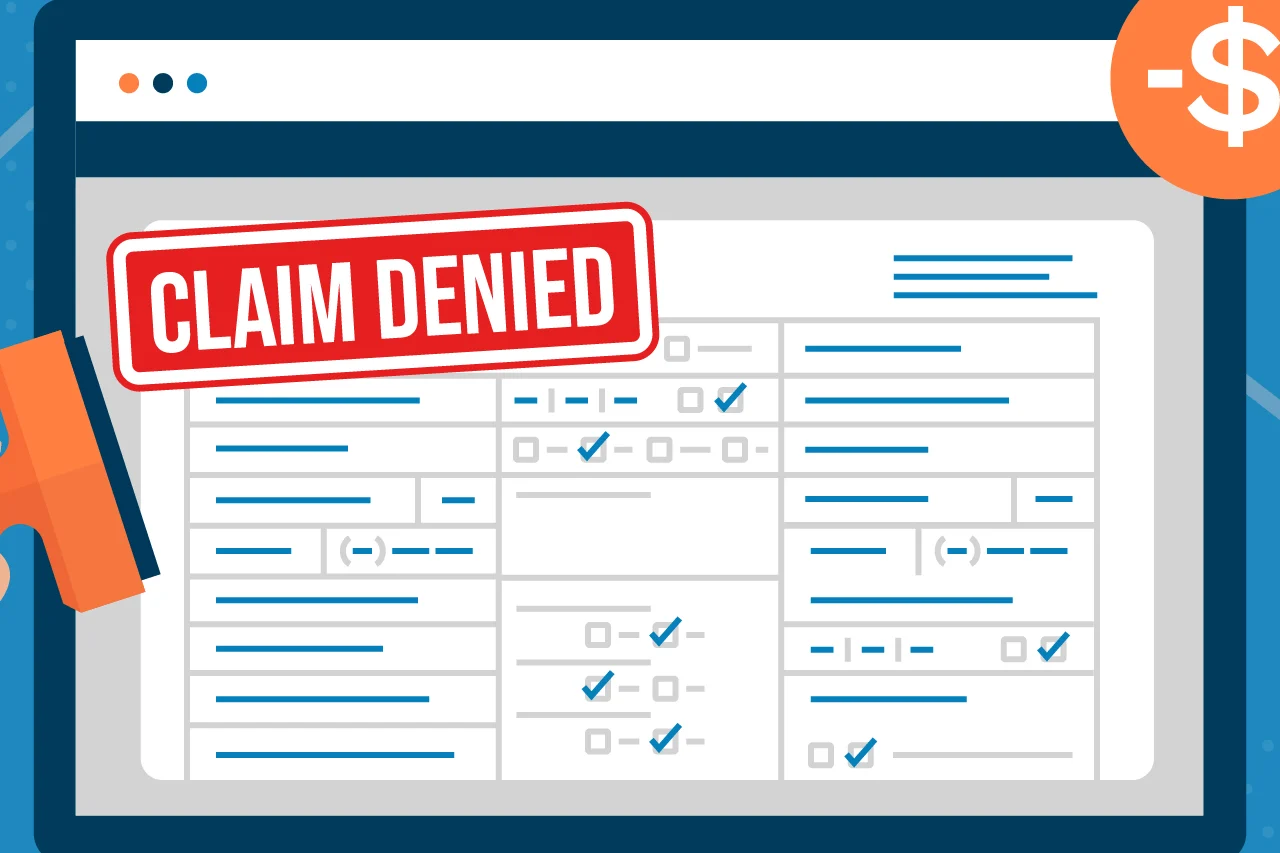

Turn Denied Claims Back Into Revenue

Every denied claim is money your practice already earned but hasn’t collected. Our denial management service is built to find out why claims are getting rejected, fix the root cause, and get every dollar you’re owed back into your revenue cycle without adding to your staff’s workload.

Health XRCM works as an extension of your billing team, handling the full denial lifecycle from first flag to final payment: identification, root cause analysis, correction, appeal, and prevention. Because our in-house operations team is based offshore, we’re able to give claims the level of manual, detail-level attention that denial resolution actually requires at a cost structure that in-house US hiring can’t match.

What is Denial Management in Healthcare?

Denial management in healthcare is the structured process of tracking, investigating, correcting, and appealing claims that a payer has rejected or underpaid and then using what’s learned to stop the same denial from happening again. It sits inside the broader revenue cycle, right between claims submission and final reimbursement, and it’s often the difference between a practice that collects what it bills and one that quietly writes off thousands of dollars a month.

Denials generally fall into a few recurring categories:

  • Eligibility and registration errors — coverage lapsed, wrong plan on file, or the patient wasn’t eligible on the date of service
  • Coding and documentation mismatches — ICD-10, CPT, or HCPCS codes that don’t align with payer policy or clinical documentation
  • Authorization issues — services rendered without the prior authorization a payer required
  • Timely filing — claims submitted after a payer’s filing deadline
  • Duplicate claims or bundling conflicts — services flagged under NCCI edits or submitted more than once
  • Medical necessity denials — payer disputes that the service was clinically warranted for the diagnosis billed


Each category needs a different fix, which is why generic follow-up (just resubmitting and hoping) rarely moves the needle. Real denial management in medical billing means treating each denial as a data point, not just a task to close.

Book Appointment

Why Denial Management in RCM Can't Be an Afterthought

Denials aren’t a rare exception in US healthcare billing; they’re a routine, recurring cost of doing business, and payer rules are only getting more complex, with more frequent policy updates, tighter documentation requirements, and stricter authorization rules across Medicare, Medicaid, and commercial plans. Left unmanaged, denials compound in a few predictable ways:

  • Cash flow gets unpredictable. Every unresolved denial extends your days in accounts receivable.
  • Staff time gets consumed by rework. Front-office and billing staff spend hours chasing claims instead of handling new business.
  • Revenue leaks silently. Denials that never get appealed or corrected are revenue your practice has simply written off.
  • Patterns go unnoticed. Without denial tracking by reason code (CARC/RARC), the same avoidable error keeps repeating month after month.

This is exactly where a dedicated denial management service earns its cost back not by billing more, but by recovering revenue you’ve already earned and preventing the next round of denials from happening in the first place.

Our Denial Management Solutions: How the Process Works

We built our workflow around one principle: fix the denial, then fix the reason it happened. Here’s how our denial management solutions work end to end.

Denial Identification & Tracking

We monitor remittance advice and clearinghouse reports in real time, flagging every denial as it comes in and logging it against its CARC/RARC reason code before it ages further in your AR.

Categorization & Prioritization

Denials are sorted by root cause, dollar value, and payer, so high-value and time-sensitive claims (like those approaching a filing deadline) get worked first.

Root Cause Analysis

Rather than just resubmitting, our team investigates whether the issue is coding, documentation, eligibility, authorization, or a payer-specific rule. This is the step that actually reduces future denials, not just clears current ones.

Correction & Resubmission

Coding is corrected, missing documentation is gathered, and clean claims are resubmitted through your existing clearinghouse and practice management system.

Appeals Management

For claims that require a formal appeal, we build payer-specific appeal packages with the coding references and clinical justification each payer expects, tracked through to resolution.

Reporting & Prevention

We report back on denial trends by payer, reason, and provider, so your team gets visibility into what's driving denials and we adjust front-end processes (eligibility checks, authorization workflows, coding review) to prevent repeat denials.

Denial Management Service in the USA: Built for US Payer Rules

We work exclusively within the US healthcare billing landscape, which means our team is fluent in the specific rules that drive most stateside denials:

  • Medicare and Medicaid billing and documentation requirements
  • Commercial payer policies and prior authorization rules
  • CPT, ICD-10, and HCPCS coding standards
  • CARC and RARC denial reason code mapping
  • HIPAA-compliant handling of PHI throughout the appeals process

Because our team operates as an in-house extension of your practice rather than a rotating call-center model, the same people stay familiar with your payer mix, your specialty’s common denial patterns, and your practice management system over time instead of starting from zero on every claim.

Why Choose Health XRCM for Denial Management

Not every denial management provider is set up to actually reduce your denial rate over time; a lot of them just resubmit a claim and move on to the next one. Health XRCM works differently. Your account is handled by a dedicated, in-house team rather than rotating call-center staff, so the same people stay familiar with your payer mix, your specialty’s recurring denial patterns, and your documentation habits instead of starting from zero on every claim.

That consistency is paired with a cost structure most practices can’t replicate in-house. Because our operations run through an in-house offshore team, you get the kind of detail-level, manual denial follow-up that’s usually too expensive to staff domestically without carrying the overhead of a full US-based denial management department.

FAQ

Frequently Ask Questions.

AR follow-up covers all unpaid claims, including those still pending payer decisions. Denial management specifically targets claims that have already been rejected or underpaid, focusing on correction, appeal, and root-cause prevention.

Timelines vary by payer and appeal level. Most commercial payers respond within 30–45 days of a first-level appeal, though complex clinical appeals and Medicare appeals can take longer.

Yes. That's the point of root cause analysis. By tracking denials back to their source (a coding pattern, a missing authorization step, a documentation gap), the same denial type can be caught and fixed before submission going forward.

Denial management improves cash flow by resolving rejected claims faster and reducing the number of new denials over time, which shortens the amount of time revenue sits unpaid in accounts receivable.